
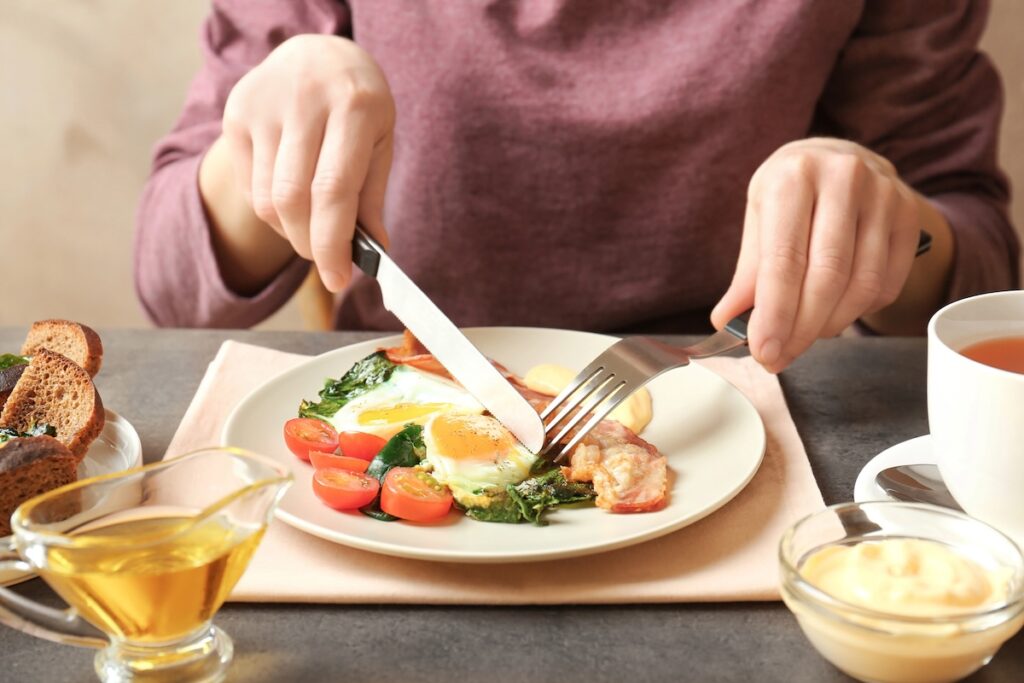
“But I’m Eating the Same as Always.”
You haven’t changed a thing. Same breakfast, same dinners, same workouts (when you can fit them in). And yet the scale keeps creeping up, your jeans feel tighter, and you can’t figure out why. If you’re gaining weight in your 40s without eating more, it’s so easy to decide your body is just broken now.
I used to say the exact same thing. I would have told you I was eating the same as always. But here’s the truth — I wasn’t. And my body wasn’t the same either.
It’s hard to say that NOTHING changed, because when I look back, my weight always started to creep up when I was drinking and eating out more. I also gained pretty easily on a carb-heavy diet. I was only doing cardio (if anything). And my stress from my corporate job was through the roof.
In this post, I’m sharing what actually changed for me, what changes in your body in your 40s, and the simple things I do now that helped me lose over 25 pounds and keep it off. Every section ends with one small step you can try this week.
I am not a licensed medical professional. As a health coach, I am not providing medical, wellness, health care, nutrition therapy, or coaching services to diagnose, treat, prevent, or cure any kind of physical ailment, or mental or medical condition. Always consult a professional in the medical and health area for your particular needs and circumstances before embarking on any health, diet, exercise, or lifestyle change.
“The Same” Quietly Changes on the Weekends
When I thought about what I ate, I thought about Monday through Thursday. Those days really were pretty similar. The weekends were a different story.
Here’s what a typical weekend looked like for me back then:
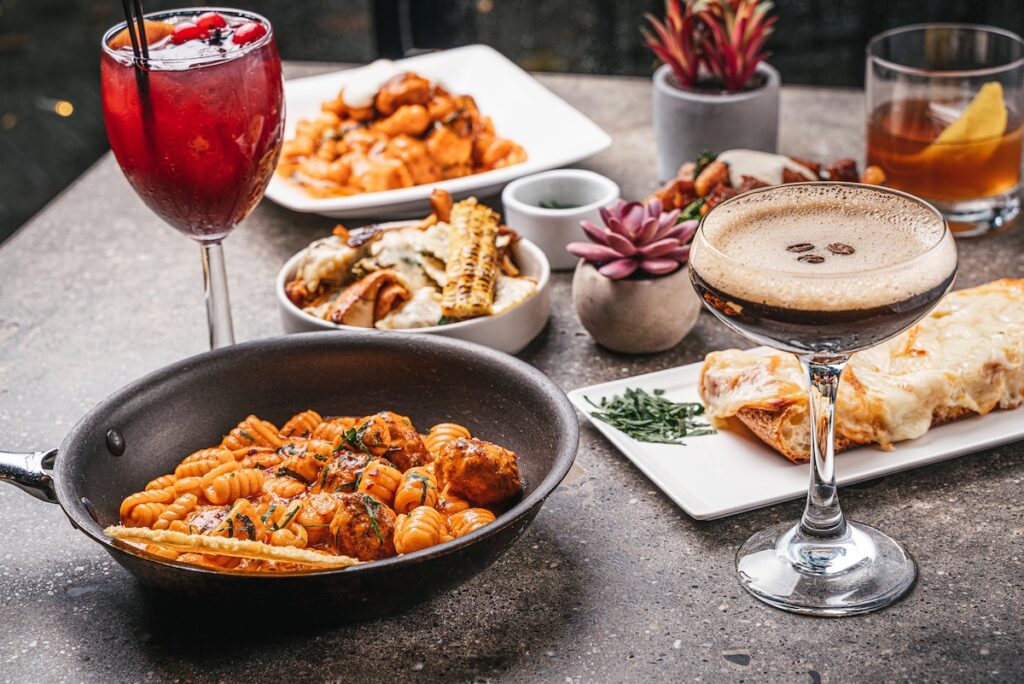
- Friday: date night or dinner out with the kids with cocktails and pasta.
- Saturday afternoon: an outing to a brewery or winery, with pizza and other fun snacks.
- Saturday night: more drinks at home, and the pigging out continued.
- Sunday: beer while watching football, ordering Mexican or pizza or something else unhealthy, plus lots of chips and snacks.
Then there were the parties. Around Halloween, Thanksgiving and Christmas, there could be several in a few weeks, each one with more eating and drinking than usual. Some weeks that meant multiple drinks on multiple nights.
None of it felt like “eating more.” It felt like having a life. That’s exactly why it’s so easy to miss how weekends can result in gaining weight in your 40s.
Why Drinks and Eating Out Make Gaining Weight in Your 40s Easier
Alcohol puts fat burning on pause. Your body treats alcohol as something to clear out first. While it’s busy processing those drinks, burning fat goes to the back of the line. A couple of drinks on Friday, Saturday and Sunday means your body spends a good chunk of the weekend doing cleanup instead of burning fat. And that’s before the late-night snacks that tend to follow.
Restaurant food is bigger and richer than home food. Restaurant portions are often double what you’d serve yourself, and restaurant kitchens use a lot more butter and oil. Just one tablespoon of oil is about 120 calories, and you’ll never see it on the plate. A pasta dinner out can easily cost more than an entire day of the way you normally eat.
So you’re eating “the same” five days a week. Then two or three days a week look completely different. That isn’t a broken metabolism. It’s the weekends.
Try this: Write down everything you ate and drank last weekend, Friday night through Sunday night. Don’t judge it or count anything. Just look at it next to an average Tuesday.
Carb-Heavy Plates Without Enough Protein Can Result in Gaining Weight in Your 40s
Pasta or pizza for dinner was a regular thing in my house. On the weekends, going out for breakfast meant a stack of pancakes or French toast. I loved those meals (I still do!), but I gained weight pretty easily when they made up most of my plate.
The problem wasn’t that carbs are “bad.” I actually tried cutting sugar and carbs completely once. I had problems from getting no fiber, and I was just grumpy. That definitely wasn’t sustainable!
The real problem was what was missing: protein and fiber.
Why Protein and Fiber Change the Whole Meal
Protein is the most filling thing on your plate. A big bowl of pasta goes down fast and leaves you looking for something else a couple of hours later. Add chicken, shrimp or a side of meatballs, and you’ll often eat less pasta and stay full a lot longer.
Your body works harder to digest protein. Your body burns more energy breaking down protein than it does breaking down carbs or fat. It’s not a huge number, but it adds up over every meal and every week.
Fiber slows everything down. Veggies, beans and fruit take up room on the plate and in your stomach. They help a meal last instead of disappearing an hour later.
So a plate of pancakes and a plate of eggs, berries and one pancake might look like “breakfast” either way. Your body sees two very different meals.
Try this: Pick one carb-heavy meal you eat every week (pizza night, pasta night, weekend pancakes). Don’t take it away. Just add a protein and a veggie or fruit to it and see how full you feel afterward.
Cardio-Only Years (If Anything)
During the stretches when my weight crept up, I was only doing cardio — if I was working out at all. I really just started working out again after I had my second daughter, over 5 years ago, and for the first few years that meant only Peloton rides.
I loved my rides and I still do! But for years I wasn’t doing anything to keep my muscle.
Why Cardio Alone Can Result in Gaining Weight in Your 40s
Muscle is use it or lose it. Starting in our 30s, we slowly lose muscle every year unless we give our body a reason to keep it. Cardio is great for your heart and your mood, but it doesn’t send a strong “keep this muscle” message. Lifting something heavy-ish does.
Less muscle means your body burns less, all day. Muscle uses energy even when you’re sitting on the couch. Fat uses much less. So if you’ve slowly traded muscle for fat over 10 years, your body needs a little less food than it used to, even if you weigh exactly the same. The same plate that kept you steady at 35 can tip you into slow weight gain at 45.
That’s one of the sneakiest parts of gaining weight in your 40s without eating more. Nothing about your food changed, but what your body needs did.
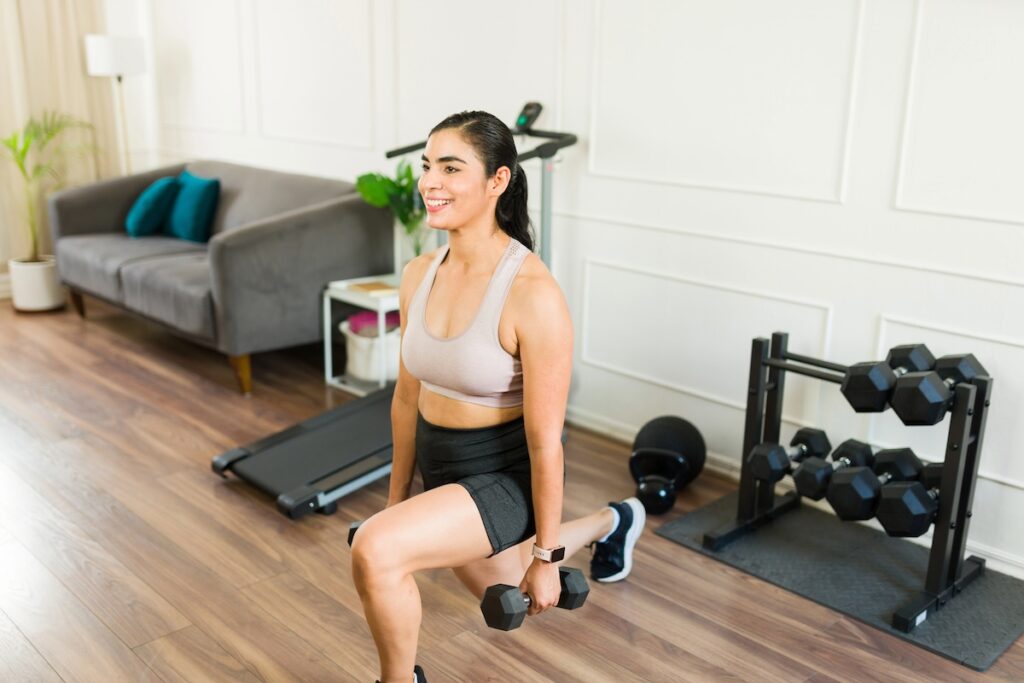
Try this: Add two 20-minute strength training workouts this week. Squats, lunges, rows and presses with dumbbells you can lift 10–12 times with good form are plenty to start.
High Stress and Restless Nights
The times I couldn’t lose weight were also the times my stress was highest — my corporate world jobs. And my sleep showed it.
I had trouble falling asleep. Then I’d wake up in the middle of the night, worrying about my workload and everything else I had to get done the next day. My body was in bed, but my brain was still at the office.
At the time, I never connected any of that to my weight. I thought weight was about food and exercise. Period.
How Stress Makes Gaining Weight in Your 40s Easier (Even When Your Food Is “Good”)
Cortisol turns up your appetite. Cortisol is your main stress hormone. When stress stays high day after day, cortisol stays up too, and it pushes you toward quick comfort food — the sweet, salty, crunchy stuff. That’s not a lack of willpower. Your body thinks it’s under threat and wants fast fuel.
Long-term stress likes to store fat around your middle. Ongoing high cortisol is linked to more fat stored around the belly. So even when the scale isn’t moving much, your jeans might be telling a different story.
Tired brains make worse food decisions. After a night of tossing and turning, everything is harder. You’re more likely to grab whatever’s easiest, skip the workout, and reach for another coffee and something sweet at 3pm.
Stress doesn’t show up on a food log, but it absolutely shows up on the scale.
Try this: Before bed, take 5 minutes and write tomorrow’s to-do list on paper. Getting it out of your head and onto the page gives your brain permission to stop running through it at 2am.
Perimenopause Changes How Your Body Handles the Same Plate
This is the part that’s not about habits at all. Even if your food, drinks and workouts truly stayed identical, your body in your 40s isn’t the same body it was at 30.
During perimenopause, estrogen starts to rise and fall unpredictably before it eventually drops. That shift affects more than your cycle.
What Changing Estrogen Does to Weight in Your 40s
Your body can get less efficient with carbs. Estrogen helps your cells respond to insulin, the hormone that moves sugar out of your blood and into your cells for energy. As estrogen declines, many women become less responsive to insulin. Your body makes more of it to get the same job done — and higher insulin makes it easier to store fat. That’s why a carb-heavy plate that never seemed to matter before can start to show up on the scale.
Fat moves to your middle. Harvard Health explains that when estrogen levels drop, women’s bodies start storing more fat around the abdomen instead of the hips and thighs. So you may notice your waistband changing before the scale does.
It stacks on top of everything else. Lower estrogen, less muscle, more stress, and a few more weekend drinks — none of them alone would explain it. Together, they explain why you are gaining weight in your 40s.
This doesn’t mean your body is broken or that weight loss is off the table. It means the approach that worked at 30 needs an update, not more willpower.
Try this: At your next checkup, ask your doctor to walk you through your fasting blood sugar over the last few years, not just whether it’s “normal” this year. A number that’s slowly creeping up is useful information. Even better, request your fasting insulin level – that’s not usually tested as part of standard bloodwork.
What I Do Now Instead
I didn’t fix this by eating 1,200 calories or doing more cardio. I tried that, and it didn’t work. I’ve now lost over 25 pounds and kept it off, and none of it required giving up date night or pizza. Here’s what actually changed.
- I strength train three times a week. 20–30 minutes each — glutes and legs on Mondays, full body on Wednesdays, upper body on Fridays. I still ride my Peloton twice a week and take Pilates and a mat class, but strength comes first.
- I build my plate around protein first. Half veggies, a quarter protein, a quarter smart carbs or healthy fats. I mostly eyeball it. Pizza and pasta still happen — they just aren’t the whole plate anymore.
- One big night stays one big night. I still enjoy date nights and parties. The difference is that the very next day, I get back on track with my normal routine, starting with a protein-centered breakfast. No starving myself to make up for it, and no “I’ll start over Monday.”
- I keep treats to a serving. Chips go in a bowl instead of eating out of the bag. A small cup of ice cream, a few small cookies. When nothing is off-limits, I don’t go crazy on it.
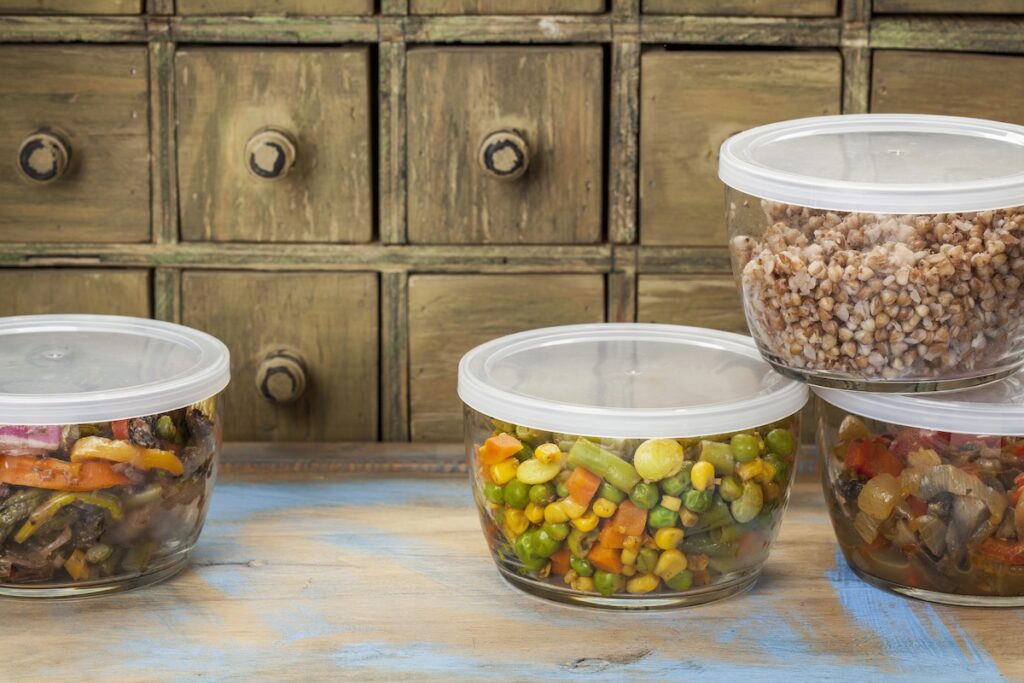
- I batch cook so the easy option is the healthy one. Cooking on one or two days a week means there’s a real dinner waiting on busy nights. It has helped me snack a LOT less.
- I take my stress and sleep seriously. Leaving my corporate job was a huge part of this for me, but you don’t have to quit your job to start. I protect my wind-down time before bed now, because I know how much a bad night costs me the next day.
If you’re eating “the same” and still gaining weight in your 40s, that’s not failure. It’s information. It’s your body telling you something shifted — and once you know what it is, you can actually do something about it.
The Same Doesn’t Have to Mean Stuck.
When I said I was eating the same, I believed it. But my weekends weren’t the same. My stress wasn’t the same. My muscle wasn’t the same. And my hormones definitely weren’t the same.
You don’t need to overhaul everything at once. Pick one “Try this” from this post and start there this week. Small changes in the right places add up faster than you think.


3 Comments