
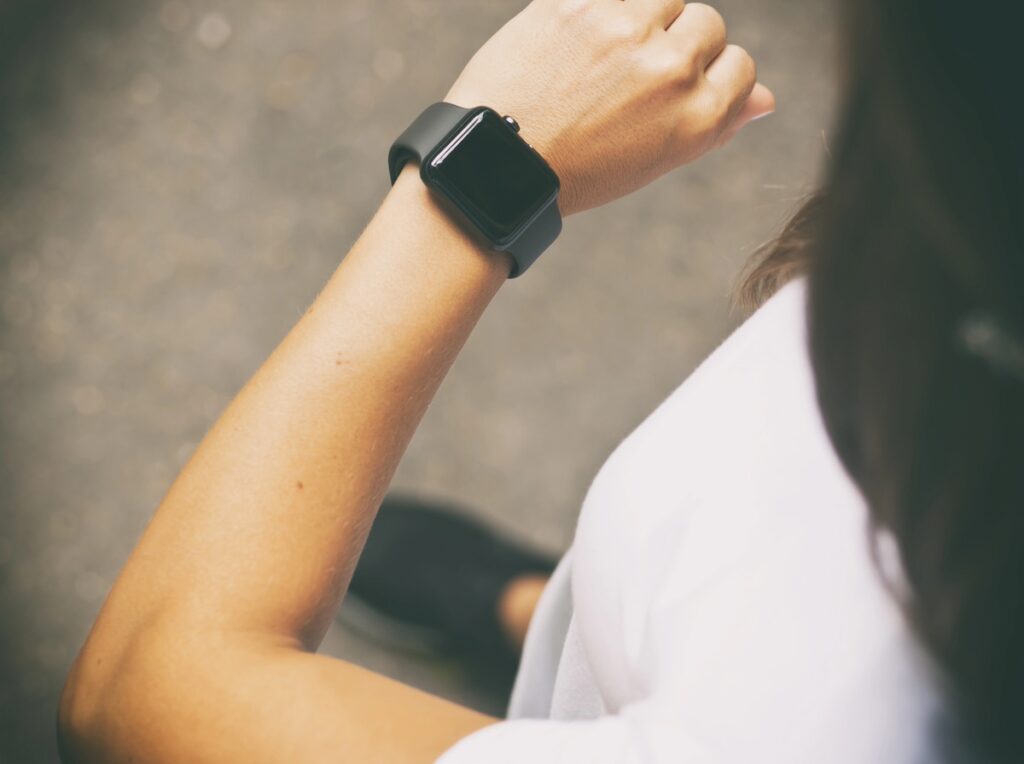
Why I Started Questioning My Fitness Tracker
Are fitness trackers worth it — or are they quietly working against you? As a busy mom and Primal Health Coach, I’ve asked myself that exact question. I used to be obsessed with my Apple Watch. Closing my rings. Hitting my step goal. Celebrating those little moments like I’d won something. And honestly? For a while, it did felt great.
But somewhere along the way, I noticed something. On days when I hadn’t hit my targets, I felt defeated — even if I’d spent the entire day on my feet chasing kids, doing laundry, running errands, and squeezing in a workout before the kids woke up. The device that was supposed to make me healthier was also making me feel like I wasn’t doing enough.
So it got me thinking: are fitness trackers worth it? Or are they just adding a layer of pressure that busy moms really don’t need? The answer, as with most things in wellness, is: it depends. Let’s break it down.
Are Fitness Trackers Worth It? Here’s What They Do Well
There definitely is a real upside to fitness trackers.
Accountability is one of the biggest wins. When you can see your daily step count, heart rate trends, or sleep data, it’s easier to spot patterns and make small adjustments. Many women are genuinely surprised to learn how little — or how much — they’re actually moving each day until they see the numbers in front of them.
Fitness trackers are also great for capturing non-scale victories. Sleep quality, resting heart rate, and recovery data can all be powerful indicators of how your body is responding to lifestyle changes — metrics the scale will never show you.
For some people, the competitive element — streaks, badges, goal rings — genuinely drives motivation. If seeing a visual of your progress makes you more likely to go for a walk or lift some weights, that’s a real benefit. I’ve seen it really work for women who are just starting out and need that external nudge to build consistency.

When Fitness Trackers Stop Being Worth It
Here’s where it gets complicated — and honestly, where my own experience comes in. Fitness trackers are designed around rigid daily targets, and real life, especially mom life, rarely fits into rigidity.
The guilt factor is real. When you haven’t hit your step goal by 9 PM after a full day of work, school pickups, and dinner prep, the last thing you need is a notification reminding you that you’ve “failed.” That kind of pressure can make movement feel like a chore rather than something you do for yourself.
There’s also the problem of activity that doesn’t get “tracked”. Fitness trackers often miss a huge chunk of what busy moms actually do — carrying toddlers, standing at the stove, folding laundry, climbing stairs twenty times a day. If your device doesn’t capture it, it doesn’t count it. But your body absolutely does.
And then there’s the obsession. Constantly checking stats, worrying about sleep scores, and optimizing every metric can create anxiety around health rather than ease. If your tracker is making you more stressed or feeling mom burnout, it’s working against your wellness goals — not for them.
Are Fitness Trackers Worth It for Busy Moms Specifically?
As a mom in your 40s, you’re likely already carrying a heavy physical and mental load. You don’t need a device adding to your to-do list or making you feel like you need to do more.
Here’s what I want you to remember: your body is doing a lot. Even on the days that don’t look like “exercise.” The constant movement of motherhood — the lifting, the rushing, the multitasking — is real physical effort that deserves recognition, whether your tracker sees it or not.
Fitness trackers can absolutely be worth it for busy moms — but only when used as a supportive tool, not a scorecard. The goal is sustainable, joyful movement that fits into your real life. It’s not about closing rings; it’s about feeling good in your body long-term. And that’s something no device can fully measure.
How to Make Your Fitness Tracker Worth It
I’ve done a lot of experimenting with this myself, and I’ve landed in a place that feels really good. Here’s what shifted for me:
- Adjust your goals to reflect real life. If 10,000 steps feels like a punishment, lower it. A goal that motivates you is more valuable than one that brings you down.
- Pick one metric that actually means something to you. Personally, I use my Peloton heart rate band mainly to monitor my heart rate during workouts. During my health coach certification studies, I’ve learned how important it is to spend most of my training time in zones 2 and 3 — where I’m building aerobic capacity and supporting fat metabolism — rather than constantly pushing into zone 5 and burning myself out. Knowing I’m training in the right range is genuinely useful.
- Use data loosely. Treat your tracker’s numbers as information, not judgment. A low step count on a hard day doesn’t mean you failed — it means you had a hard day.
- Credit invisible movement. Remind yourself regularly that your tracker doesn’t see everything. Give yourself credit for the full picture of your day. Functional workouts are just as important, if not more, but don’t necessarily count as steps.
- Turn off guilt-inducing notifications. Most trackers let you customize or silence alerts. If a buzz at 9 PM is stressing you out, turn it off. You have enough notifications in your life.
- Focus on trends, not single days. One low-activity day means nothing. Weekly and monthly trends tell the real story. Small wins and consistency with healthy habits, not being perfect all the time, is always the goal.

The Bottom Line
So, are fitness trackers worth it? Yes — when they’re working for you. No — when they’re quietly becoming another source of pressure in an already full life.
The best wellness tools are the ones that make you feel supported, not judged. If your tracker does that, keep it. If it’s making you feel like you’re constantly falling short, it might be time to adjust how you’re using it — or whether you need it at all.
According to Healthline, fitness trackers can be effective motivation tools — but their benefit depends entirely on how you use them.
I’ve made peace with my tracker by giving it one job and letting the rest go. My invitation to you is to do the same. Use it in a way that feels good and ditch what doesn’t.





4 Comments