

You had a week.
Maybe it was a rough one — the kind where workouts didn’t happen, dinners were from DoorDash, and you went to bed later than you meant to every single night. Now it’s a new week. You’re thinking about getting back on track, but you’re staring down that familiar feeling: the urge to start over, punish yourself with a brutal workout, and swear off everything fun until you’ve “made up” for it.
Here’s what I want you to know before you do any of that: one off week does not undo your progress. It doesn’t reset your metabolism, erase your strength, or mean that you should give up. Getting back on track isn’t about punishment — it’s about returning to your habits with compassion.
In this blog post, you’ll learn exactly how to do that.
First, Understand Why Getting Back on Track Feels So Hard
Before you focus on getting back on track, it helps to understand what knocked you off in the first place. For busy moms in their 40s, it’s rarely a lack of discipline. More often, it’s:
- A spike in stress (work, kids, relationships, life)
- Poor sleep that tanked your energy and cravings
- An overpacked schedule with no margin for self-care
- Hormonal shifts that made everything feel harder than usual
Sound familiar? These aren’t excuses. They’re real, physiological reasons why your body and brain resist healthy habits under pressure. And here’s the thing — your metabolism doesn’t crash – and you don’t gain 10 pounds – after one rough week. But chronic stress, poor sleep, and under-fueling over time? Those do affect your hormones and fat loss. Which is exactly why how you bounce back matters just as much as the bounce back itself.
Step 1: Getting Back on Track Starts With Reflecting, Not Criticizing
The first step to getting back on track is a quick, honest look at what happened — without turning it into a guilt spiral. Ask yourself:
- What got in the way this week?
- Was it a one-time situation or a pattern I keep running into?
- Is there one small thing I could adjust to make next week smoother?
This isn’t about over-analyzing. It’s about treating yourself like you would treat someone that you care about. I find it helpful to journal (almost) daily. It helps me sense patterns and bring my struggles to the forefront, so I’m better able to address them. Self-compassion for weight loss and being kind to yourself is actually a fat-loss strategy.

Step 2: Getting Back on Track Doesn’t Mean Starting Over
This is the big one. After an off week, the instinct is to overcompensate — cut calories hard, add extra workouts, go all-in on restriction. That’s not a healthy exercise or food mindset. Here’s what that actually does to your body:
- Slashing calories sends a stress signal to your metabolism, making fat loss harder
- Adding intense workouts on top of stress and poor sleep raises cortisol further
- The all-or-nothing cycle burns you out faster and makes consistency nearly impossible
Getting back on track means returning to your normal, sustainable habits — not ramping up to an extreme version of them. Fuel your body well. Move in ways that feel good. Get to bed at a decent hour. Low-impact workouts for moms are a great starting point for easing back into your typical routine gently. After an off week I always like to start with a low-impact ride or easy walk.
Step 3: How to Get Back on Track With Small Wins
You don’t need a perfect Monday to get back on track. You just need one small win.
Try one of these momentum-builders:
- A 15-minute strength workout (something is always better than nothing)
- A protein-rich breakfast to stabilize your blood sugar and energy
- A short walk outside to lower cortisol and reset your mood
- Going to bed 30 minutes earlier than you did last week
Small wins stack. One good choice leads to another. And before you know it, you’re not “getting back on track” — you’re just back on track.

Step 4: Getting Back on Track Means Addressing Sleep and Stress Too
Most people focus their recovery on what they eat and whether they exercised. But for women in their 40s, sleep and stress management are just as important for fat loss and energy.
When you’re sleep-deprived, your hunger hormones tend to shift in ways that make you crave more carbs and sugar, which therefore makes it harder to feel satisfied after meals. And when chronic stress keeps cortisol elevated, it can disrupt your appetite regulation and make healthy choices much harder than they need to be — Harvard Health has a great breakdown of why stress causes people to overeat if you want to dig deeper.
So after an off week, a genuine recovery plan looks like: protecting your sleep, finding small ways to lower stress (even a 10-minute walk counts), and fueling your body — not punishing it.
Ready to Build a Routine That’s Easy to Return To?
If you find yourself constantly starting over, the problem usually isn’t willpower — it’s that your workout routine is too complicated or too intense to maintain through a real, busy mom life.
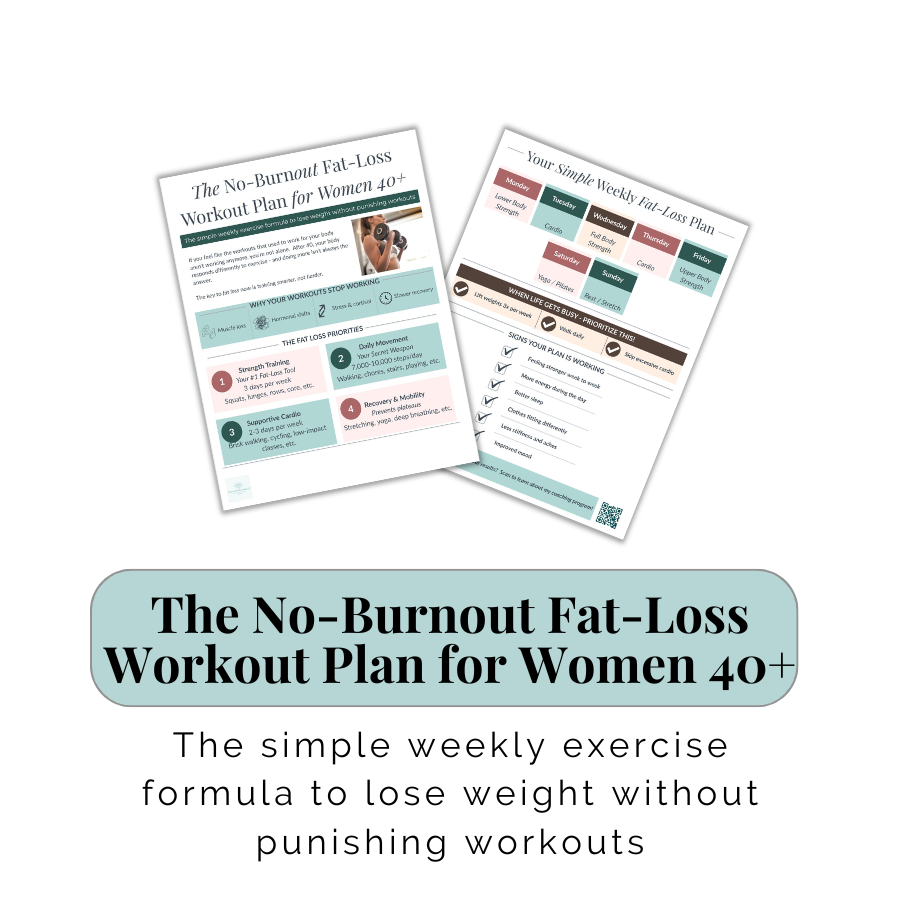
That’s exactly why I created the No-Burnout Workout Formula for Women 40+ — a free guide that shows you how to structure your workouts so they’re sustainable, effective, and easy to return to after any off week.

The Real Secret to Getting Back on Track Every Time
The women who reach their health goals aren’t the ones who never have an off week. As a fellow busy mom, I know it’s pretty much impossible to never have an off week! However, it’s a lot easier to reach your health goals if you get back on track quickly and without drama.
A handful of rough weeks in a year of mostly-consistent effort barely moves the needle. But letting one rough week spiral into a month of guilt, restriction, and overcompensation? That’s where progress stalls.
Give yourself grace. Return to your habits. Celebrate non-scale victories. Keep going.




4 Comments